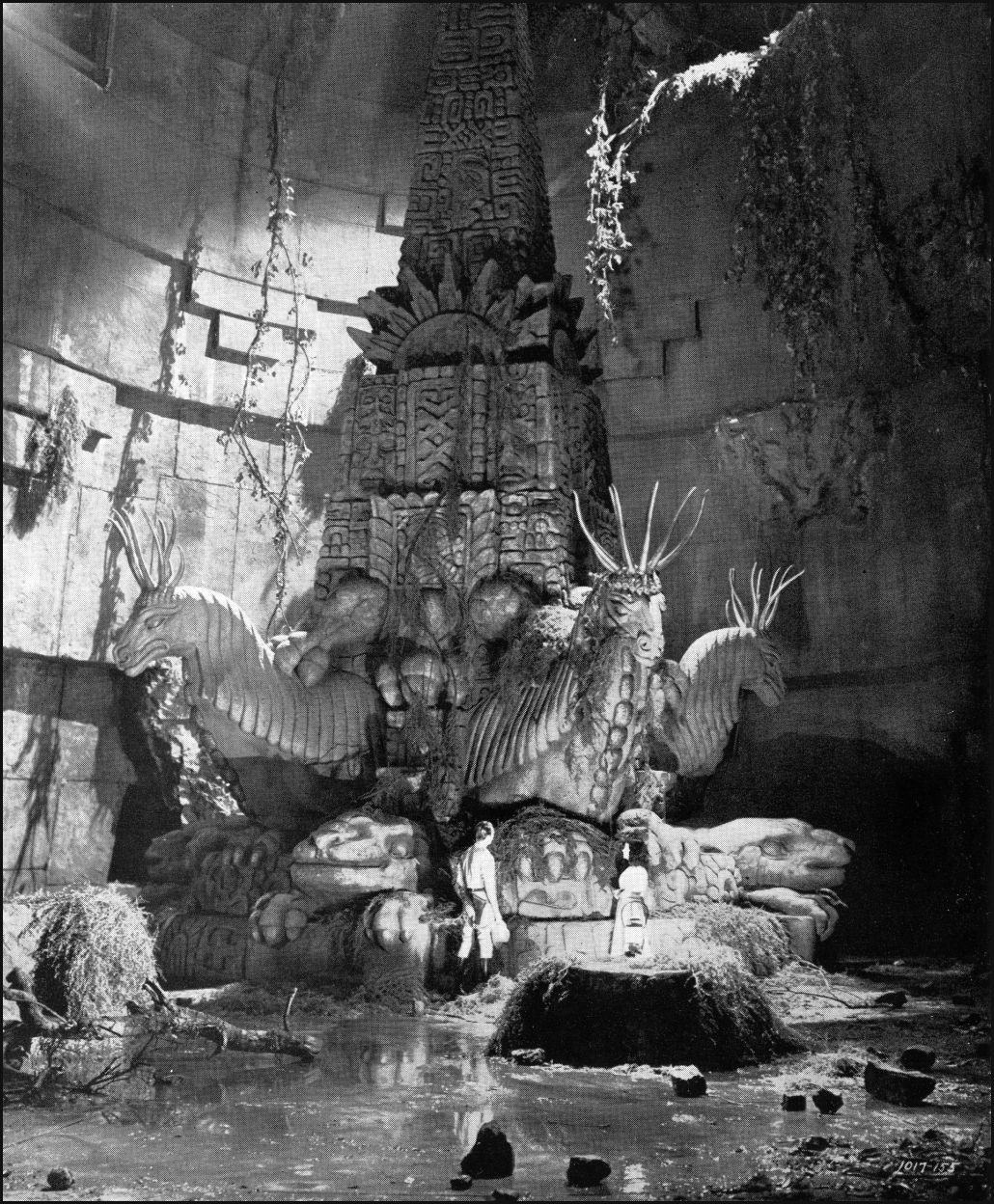
What has to have been more than twenty years ago now, I saw a promotional still of the incredible “sun temple” set from Green Hell, and knew that I had to watch it.
Of course, it was more than just the set. Green Hell is the second-to-last movie directed by the great James Whale, and the fifth film to feature none other than Vincent Price, “before he specialized in spooks,” as costar Douglas Fairbanks Jr. would later put it in his memoir.
Karl Freund (director of The Mummy and Mad Love) is running the camera, and the rest of the cast is a veritable Old Hollywood who’s who, including the aforementioned Fairbanks, Joan Bennett, George Sanders, Alan Hale, George Bancroft, and even a brief appearance by Lupita Tovar, memorable star of the Spanish-language Dracula.
Of course, the real stars are those sets. This was a lavish production on Universal’s part, with a reported budget of over half-a-million dollars. The “sun temple” set was allegedly 125 feet tall by 225 feet wide, and I would say that you’d have to see it to believe it, but you probably actually have, because Universal reused it for The Mummy’s Hand later the same year.
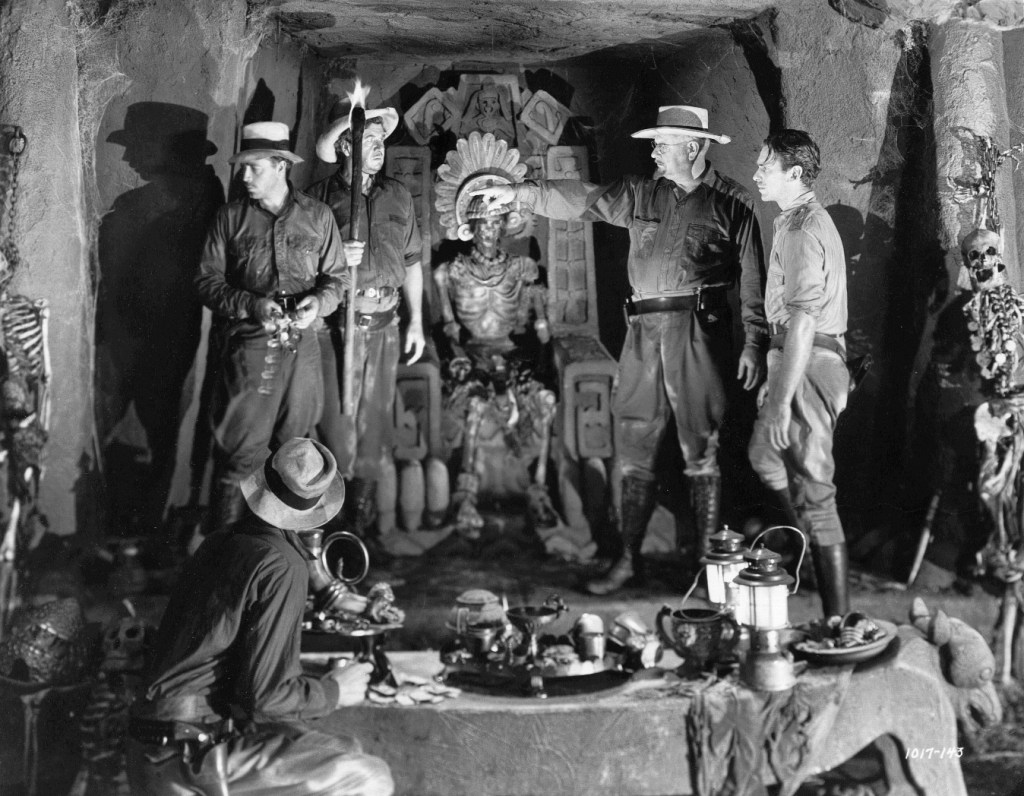
It isn’t just the awe-inspiring “sun temple” set, though. Green Hell, for all its faults, has some truly breathtaking ruin business, every time the ruins manage to make their way onscreen, from the steps leading up the hill outside (also reused in The Mummy’s Hand) to the Incan tombs to a shot of the adventurers descending precarious stone steps by torchlight, their shadows cast long on the wall.
Even the production stills don’t do it justice, and the sequence in which a massive rainstorm begins to flood the “sun temple” set, with water pouring in from above, is genuinely what movies are made of.
Unfortunately, the ruins may be the film’s MacGuffin, but they’re where too little of its focus lies. In the two decades between when I first saw that promotional still and when I finally got a chance to watch Green Hell – thanks to its inclusion in the new Directed by James Whale set from Imprint – I learned that the film was notoriously something of a turkey.
Most of the people involved would later remember it as a low point in their various careers, and Price himself famously said, “About five of the worst pictures ever made were all in that one picture.”
Generally speaking, the film’s problems are attributed mostly to its almost absurdly melodramatic screenplay. Price’s quote continues, “We all adored making it because we realized there wasn’t a single word in it that was real. The sets were terribly opulent, very expensive, but it had the most preposterous story.”
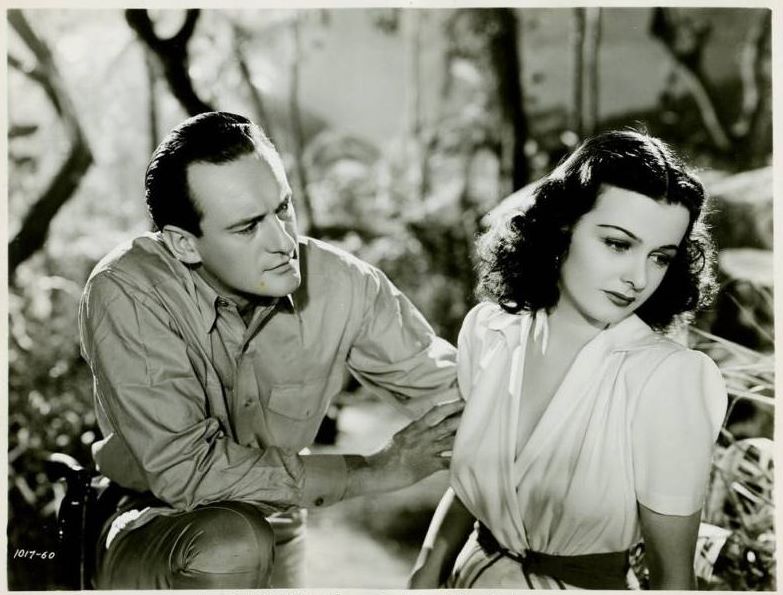
That story comes to us from Frances Marion, the first writer to ever win two Academy Awards. Despite that, no one is wrong to criticize it – the story here is a stinker, bogging our jungle adventure down in a romantic melodrama in which characters are occasionally killed off out of sheer narrative utility.
There are other problems with Green Hell, too. Of course it’s racist. We didn’t really make jungle adventure movies that weren’t. But it is also by no means the worst offender in that regard.
Yet, for all its problems, I wasn’t disappointed, watching it after all these years. I sometimes half-jokingly say that we didn’t how how to make bad movies prior to the 1950s, and while I know that isn’t actually true, seeing a picture like this reminds me of why I say it. Is Green Hell bad, for an Old Hollywood movie? The people involved in making it seemed to think so, and the critics agreed, with The New York Times calling it “the best worst picture of the year.”
Green Hell may indeed be a turkey, but there’s far too much talent – onscreen and off – for it to not still be imminently worth watching. And while the ludicrous melodrama may drag the whole thing down (despite its considerable gay subtext), the absolutely jaw-dropping sets go a long way toward making up for it.
And, ultimately, the fact is that I would take a turkey like this over most genuinely good movies from the last twenty years any day. That’s just who I am.




 The Incredibly Strange Creature Who Stopped Living and Became Orrin Grey
Leave a comment