I’ve never read The Canterbury Tales.
This is something of a shameful confession, especially since I have a degree in English. Of course, in the process of getting said degree, I naturally read parts of The Canterbury Tales, but never have I read Chaucer’s (potentially unfinished) magnum opus in its entirety.
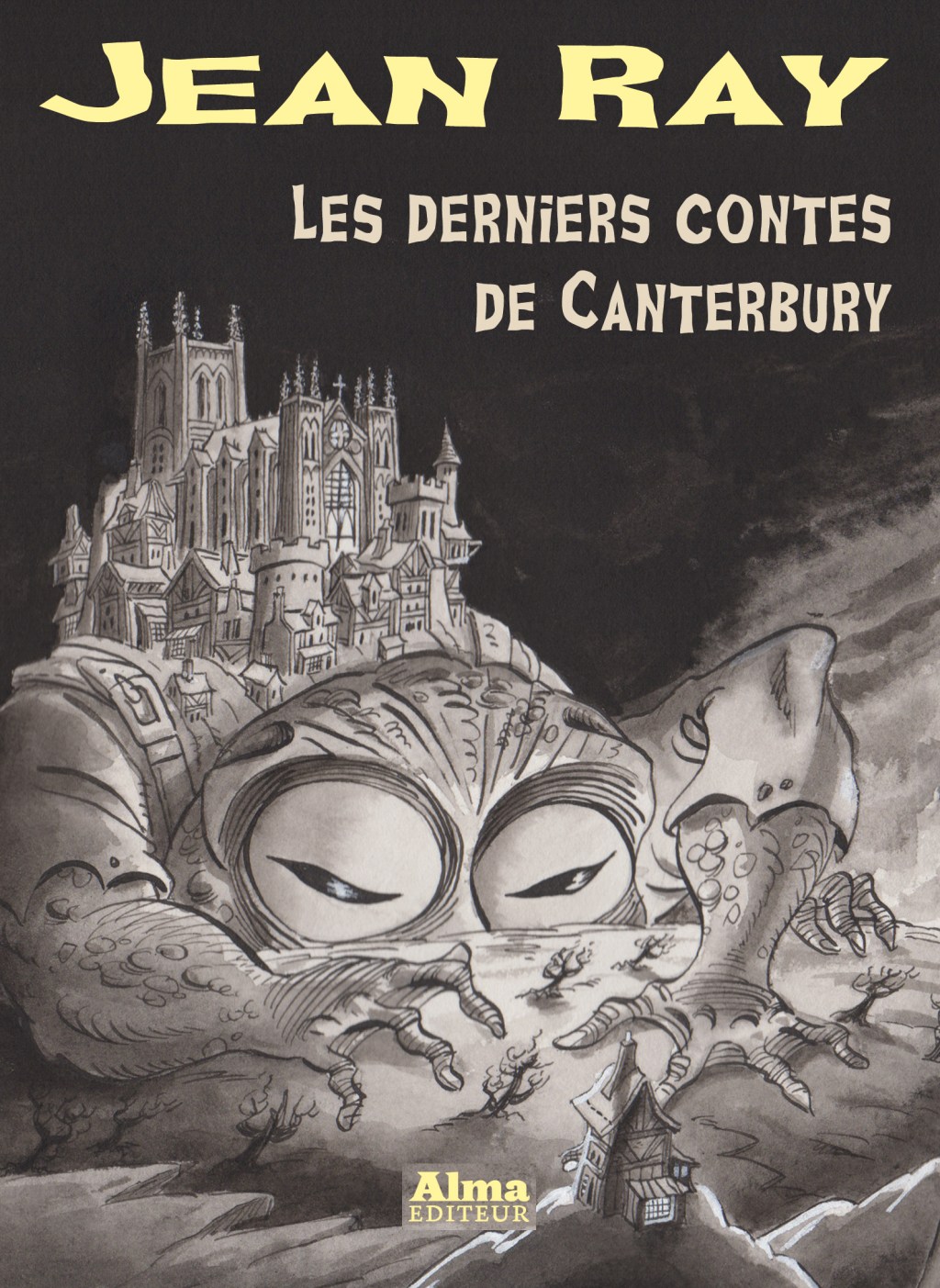
Fortunately, while greater exposure to Chaucer would no doubt provide additional savor, one need not be familiar with The Canterbury Tales to enjoy Jean Ray’s bold, ambitious The Last Canterbury Tales, originally published in French in 1944, and the latest of an absolutely essential series of translations of the works of “the Belgian Poe” by Scott Nicolay from Wakefield Press.
The book features two introductions that will help to fill in any needed background and, as always, Scott’s indispensible annotations give plenty of context for each story, providing fascinating information on Ray’s use of language, on the habits and customs of the time, on the book’s many literary references, and so forth.
Though I am a devoted fan, I don’t know much more about Jean Ray’s work than what can be gleaned from these various Wakefield Press translations, but I gather that The Last Canterbury Tales was a great success for him. From one of the introductions: “Ray’s collection enjoyed a particularly favorable reception, and it marks in some ways the author’s wartime peak.”
Reading it, it’s easy to see why. The stories in The Last Canterbury Tales are, almost to a one, quite short, and always broken up with digressions and interjections in Ray’s inimitable style. These interjections take the form of the various tellers of the tales introducing themselves in the Tabard Inn, where the stories are told.
Even compared to Jean Ray’s previously-translated short stories, The Last Canterbury Tales is made up of tales that are particularly absurd and often bordering on surrealist, yet never without threads of darkness and horror.
Among the subjects undertaken are executions, cannibalism, ghosts, witchcraft, banditry, timeslips, cosmic horror, and much more, while the cast of characters include a talking tomcat (himself a character from another famous book), a two-dimensional paper puppet, and a giant parrot, among more human companions, all boasting names like Uriah Chickenhead, Reid Unthank, Old Mr. Pankeydrop, and so on.
As a longtime fan of Mike Mignola, I know that he is, in turn, a fan of Jean Ray, and I know that Ray has influenced some of his work. I think to try to explain both the oddities and the pleasures of a Jean Ray book to someone who wasn’t versed in his stuff, I would make a comparison to some of Mike’s work.
Specifically, if you’re only familiar with Mike Mignola from Hellboy, you might be surprised at the connection – though there are certainly elements of Ray in some of the Hellboy stories. For a better idea of what to expect from a Jean Ray tale, I would direct you instead to the stories in The Amazing Screw-on Head & Other Curious Objects or Mignola’s recent Bowling with Corpses.
In those odd little tales, you will find not only some of my favorite Mignola stories, but also the ones that come the closest to the works of Jean Ray – especially those contained within The Last Canterbury Tales.




Leave a comment