I don’t know where it was that I first saw stills from Flesh and Fantasy, but I’m going to guess that it was courtesy of Richard Sala, who turned me on to plenty of these old movies.
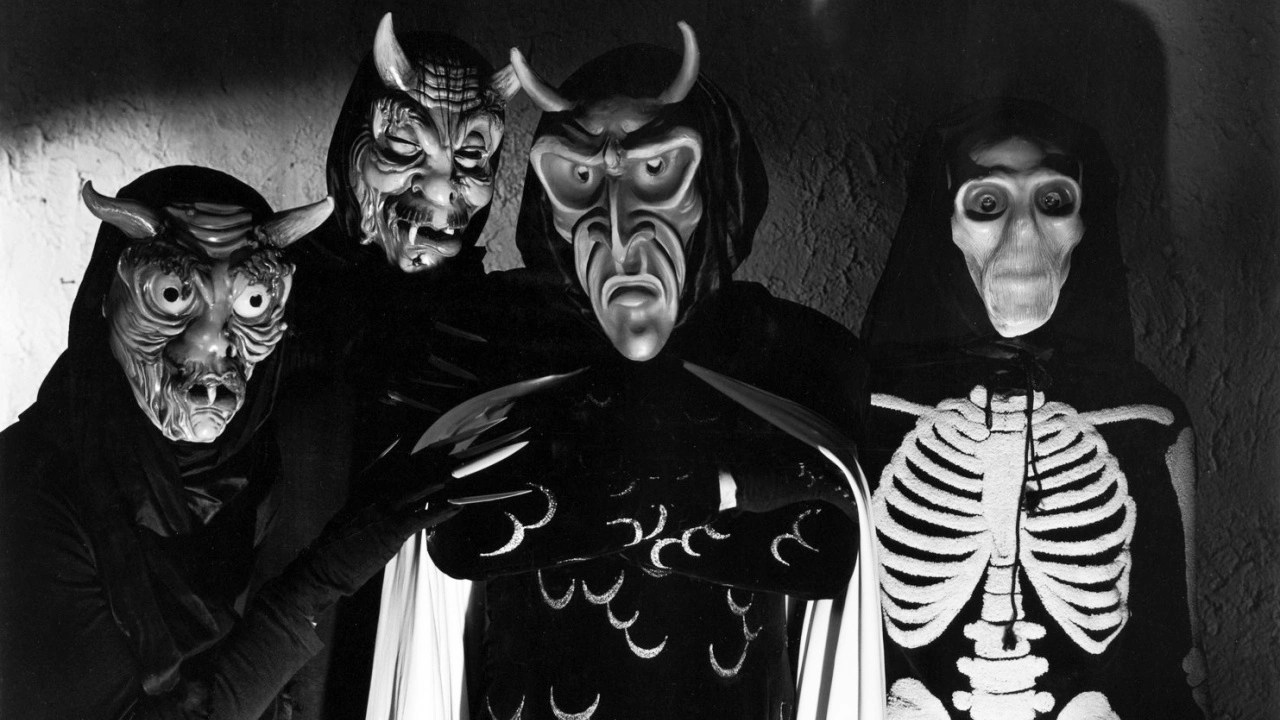
The stills you see are always from the first segment, which takes place during Mardi Gras. It makes sense, because the first segment, and especially the beginning of it, is as visually striking as the film ever becomes – and more so than most films ever get. In the opening sequence, in a moment like a pantomime of hell, masked figures dressed as specters and demons drag a drowned body from the river.
Originally, the body was to have belonged to an escaped killer (Alan Curtis) who perished in a storm in a sequence that was mostly shot but ultimately not included in the film. It was, instead, eventually expanded into the 1944 picture Destiny which, at the time of this writing, I have never seen.
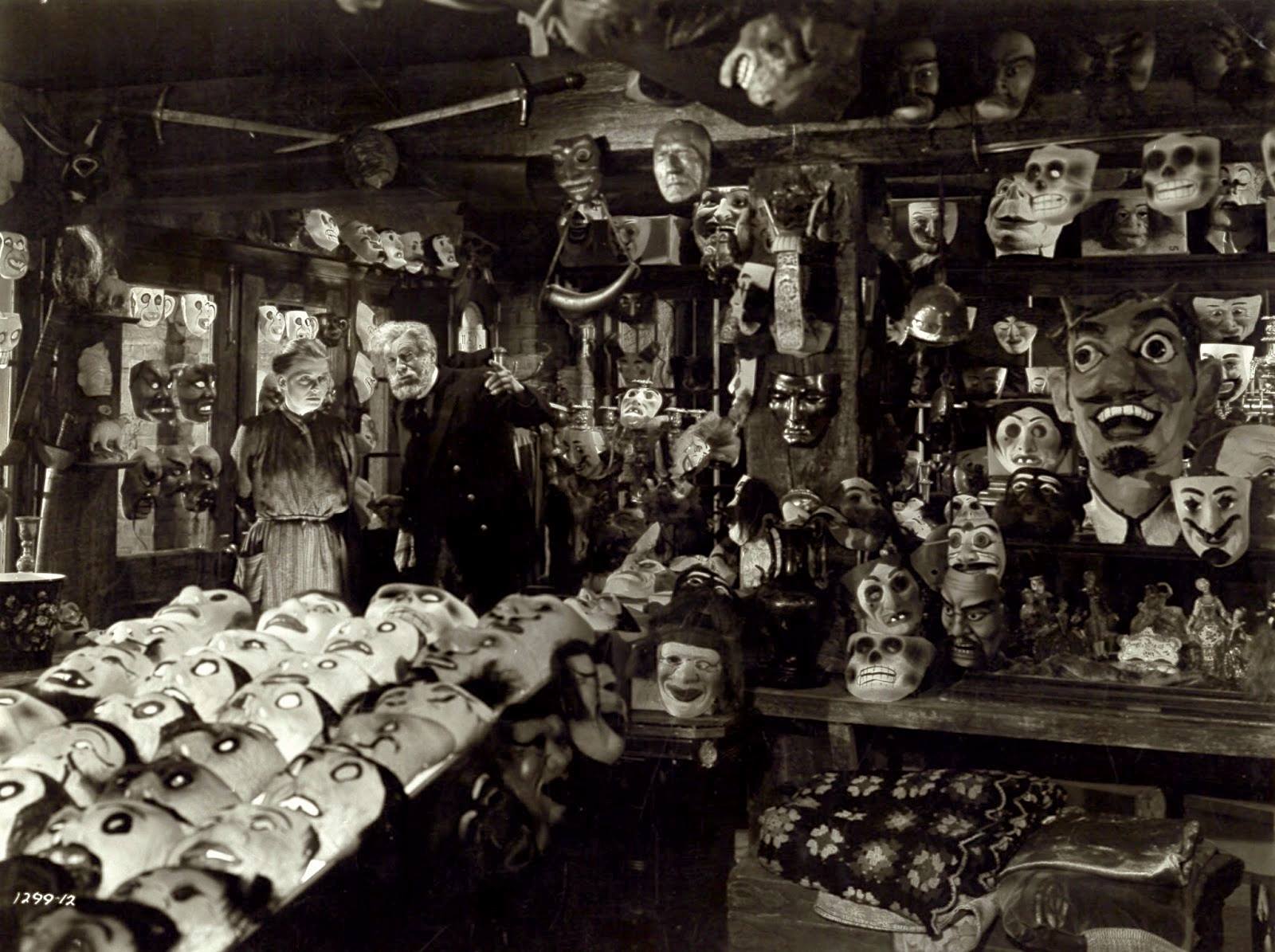
Besides the opening sequence of the masked figures, there are also plenty of stills of the mask shop where our ostensibly homely protagonist (Betty Field) gets a mask that makes her beautiful for a night. Of the film’s three segments, it is the one that is most a morality play, but the beauty of it is not limited to the mask shop or the figures at the beginning – see, for example, one gloriously-staged dance sequence set at the Mardi Gras party.
The opening may be the segment that is most remembered for its stunning visuals, but it’s probably the least interesting of the three, and the one least concerned with the film’s overall preoccupation with the conflict between free will and determinism.

The strongest sequence definitely belongs to Edward G. Robinson, who plays a lawyer who is told by a palm-reader at a party that he is going to kill someone. When the fortune-teller’s other predictions seem to be startlingly accurate, he becomes fixated on the idea of knocking someone off to “get it out of the way.”
The segment is based on a short story by Oscar Wilde, “Lord Arthur Saville’s Crime,” and is as close as the movie actually gets to a horror story – which is still fairly far away. Instead of horror, all three segments could better be classified as slightly spooky melodramas, all concerned with fate, destiny, dreams, portents, and the like.
The third segment stars Charles Boyer and Barbara Stanwyck. Boyer plays a high-wire performer with a particularly dangerous act, who dreams of falling and subsequently worries that he may have lost his nerve. When he encounters the woman who was also in his dream onboard a ship bound for New York, he begins a whirlwind romance with her that also leads him to try to determine whether or not he believes that he is master of his own destiny.
While the segment with Robinson is the best of the bunch, and engages in some striking visuals, it is probably the least visually interesting. Just as the first segment had its incredible Mardi Gras tableaux to fall back on, the final segment has some extremely memorable images of the circus.
All this is wrapped up in a framing story (tacked on at the last minute) which sees two fellows in a gentleman’s club each discussing the various merits of dreams, fortune-telling, superstition, and so on.
Flesh and Fantasy is, by no means, the first film of its type – director Julien Duvivier had made Tales of Manhattan just the year before, for example – but it is a notably early one, and acts as a good companion piece to something like Dead of Night, even while it is never as iconic or as horrific as that picture.
I was hoping, based on the stills I had seen, that it would make good October viewing. And it certainly doesn’t make for bad October viewing, but I would kill for a movie from this era that captures the look of Halloween with the same vividness with which this one captures Mardi Gras.





 The Incredibly Strange Creature Who Stopped Living and Became Orrin Grey
Leave a reply to caffeinatedjoe Cancel reply