At the end of World War II, when the Allied forces had crushed the German war machine, America chose not only to spare several scientists and members of the Nazi party from prosecution for their war crimes, but initiated a secret program to bring them into U.S. government employment.
This was Operation Paperclip, which, in recent years, has gone mainstream enough to play a role in the plot of Disney/Marvel’s Captain America: The Winter Soldier. Its stated purpose was to “assist in shortening the Japanese war and to aid our postwar military research.” Overall, it was seen as a success. German scientists proved instrumental in the American space program, as well as in other fields.
It wasn’t the only time, either. In postwar Japan, the United States government covered up Japanese war crimes and blocked the prosecution of personnel who had committed horrific human experimentation, in exchange for access to their research.
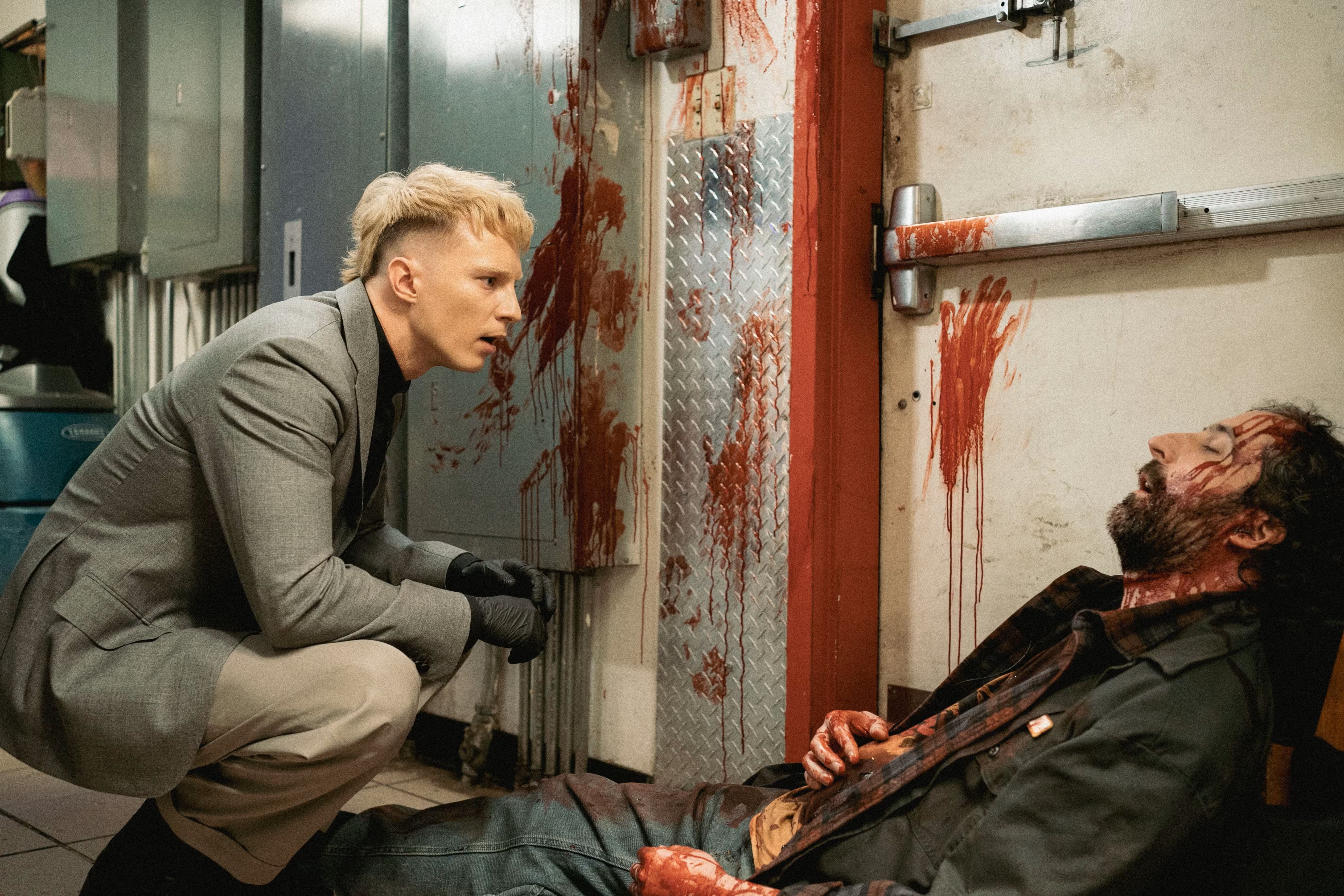
There’s a lot to unpack about all of this, and a brief post about a movie like Onslaught isn’t the place to do it, but the implicit message is simple enough: “These things are fine, maybe even commendable, as long as they benefit the interests of U.S. imperialism.”
Onslaught uses Operation Paperclip as its jumping off point, suggesting that Nazi scientists were secretly incorporated into powerful positions within the American military apparatus not because their insights were vital, but because their goals and the goals of our government were fundamentally the same.
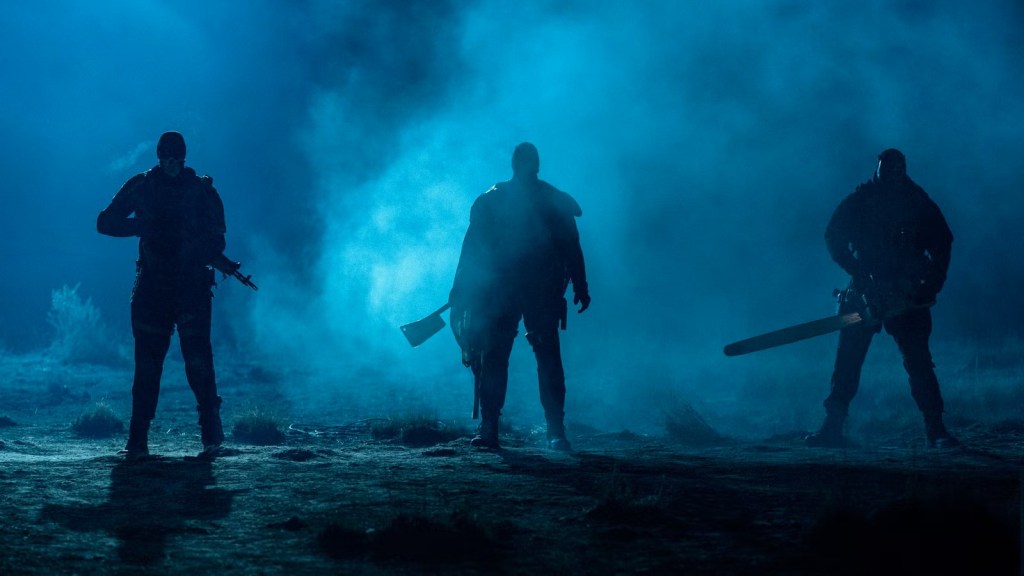
Though Onslaught never directly addresses the current political climate (despite the relative ease of reading its super soldier killers as ICE analogues – a take that is both accurate and presents problems of its own), its assessment of the United States military industrial complex is relatively simple: it’s Nazis all the way down; not by accident, but by design.
Onslaught‘s other critique is that all the people who pull the levers are weird, decadent perverts. Here, that takes the easy visual shorthand form of fetish clubs and dom/sub relationships, while out in the real world, it manifests in fascist fascinations with cuckoldry, forced birth, and an obsession with children’s genitals, to name a few.
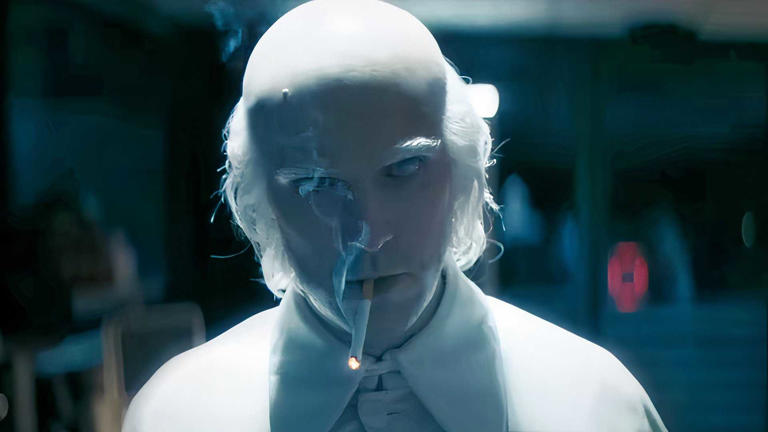
I have seen criticisms of Onslaught that suggest that Dan Stevens’ Nazi scientist – with his milky eye, his ridiculous bald cap, and his flouncy cape – seems to have come from a different movie, but I think that’s on purpose.
When we see the people who hold power in Onslaught, they are cartoon characters, from Stevens’s Nazi to the the drug-addled agent sent in to clean up the mess. The only “normal” people are the blue collar folks who live in the trailer park, or who are massacred in the truck stop.
It’s essentially a variation on the “deep state” conspiracies of the political right, but repurposed as a reminder that everyone who makes the decisions that determine your life are all weirdos who come from a completely different movie than the one in which you have to live.
This is all interesting, but ultimately undercooked in the film itself, which feels like it was once a much more ambitious script that had to get trimmed down, or turned into the first half of a prospective two-parter.
All the buildup to the titular onslaught, as such, is great, but once the action starts, the movie ironically grinds to a halt. Which is not to say that the end result is bad. At a hair over 90 minutes, it never sticks around long enough to wear out its welcome. It just feels unfinished.
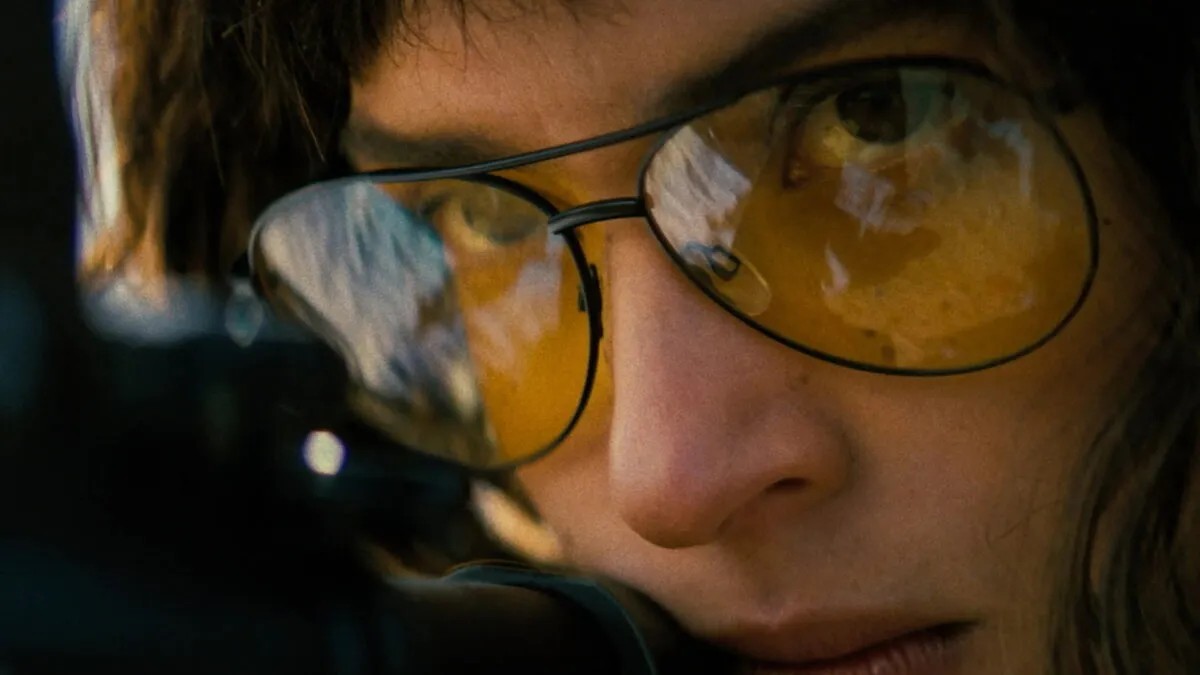
Between them, director Adam Wingard and screenwriter Simon Barrett have made one genuine classic – but that’s one more than most people ever make. Ostensibly, Onslaught takes place in the same “universe” as that film, partaking of the particular poison of our age, that all movies must occupy some kind of shared universe rather than standing on their own.
However, aside from both involving super soldier programs and southwestern settings – and one sequence with pumpkins in the beginning of Onslaught – there’s little enough to tie the two movies together. This is just as well. The Guest is perfect on its own. It doesn’t need anything else, and this movie doesn’t need it.
What does feel of a piece with The Guest is the music, and the obvious debt to the filmography of John Carpenter. The (possibly apocryphal) origin story of The Guest is that Wingard and Barrett cooked it up after watching a double-feature of Halloween and The Terminator. I’ve heard no such story about Onslaught, but if you shotgunned down Universal Soldier and Assault on Precinct 13, you’d get pretty close.





Leave a comment